


Welcome to Lead without Limits, where I share weekly tips for executives who want real talk from someone who’s been in their seat. I write about the leadership, career, and mindset topics that come up as I help clients navigate changing contexts and new seasons in work and life. Thanks for being here.
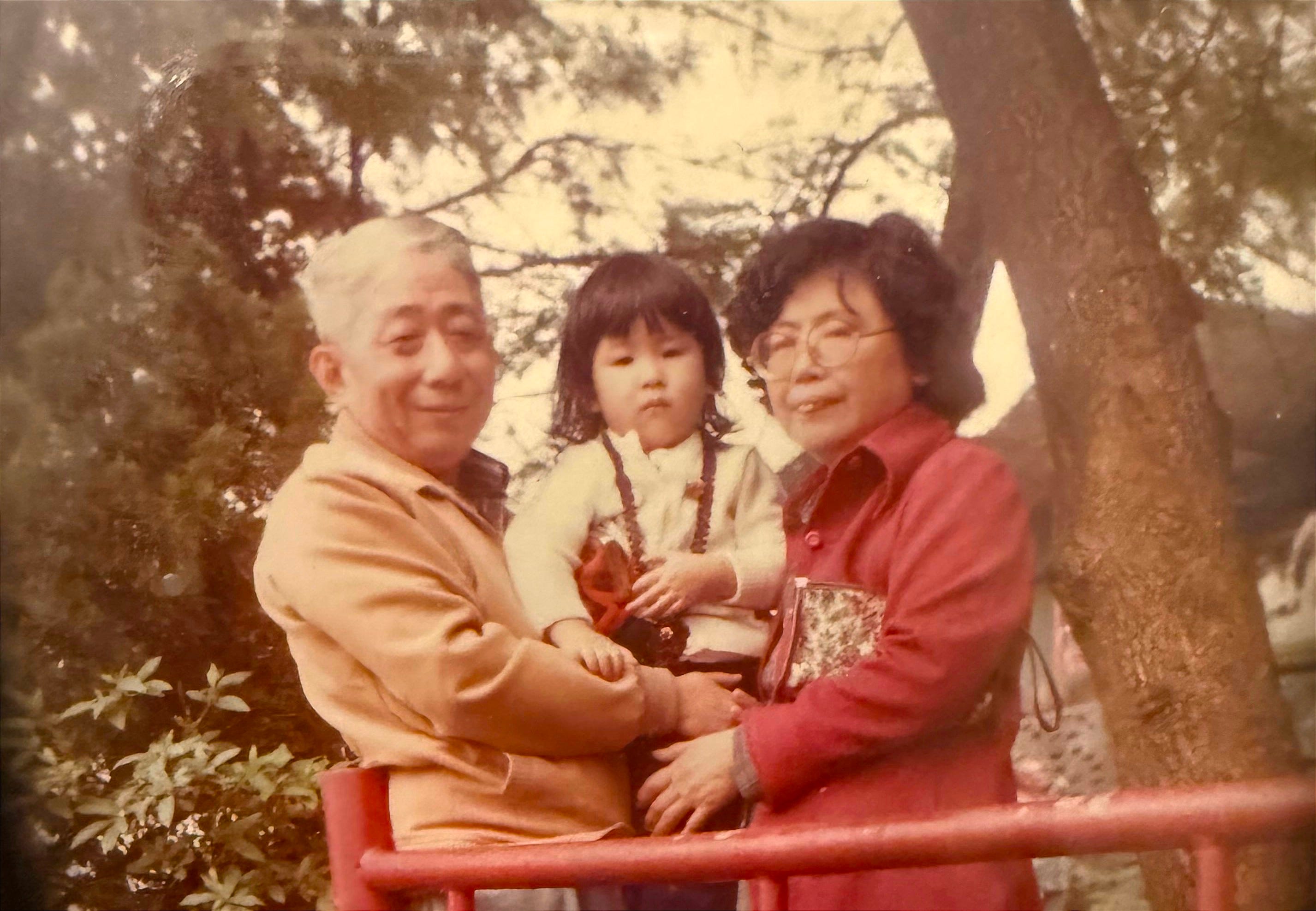
Yesterday morning, my paternal grandmother passed away.
I called her Nai Nai.
She was 101, and after months of fearing what was beyond, she told my father the hour before she passed, she “was going home.”
As I thought about my post this week, it became obvious: I’d share the lessons I learned from my grandmother, both what to emulate and what to avoid.
Her life was nothing notable for most people, and yet, it has always felt extraordinary to me, filled with courageous moves and perseverance almost to a fault.
I’m sad, and I need time to grieve. But grief is a funny business. It shows up differently for everyone. For me, the best way to honor my grandmother and process my feelings is to translate what I learned from her into leadership lessons I value and will continue to carry forward.
But before I share the lessons, let me give you some more context about my grandmother’s life.
From idyllic to turbulent, growing up without guarantees.
My grandmother grew up in China. I think it was in Jiangsu province on the eastern coast. (I wish I had more details, but thank you in advance for not judging.)
Nai Nai grew up in a well-to-do family. They had servants, cooks, and people who took care of my grandmother’s and the family’s needs. My grandmother started life sheltered. But all around her, the world was shifting. It was a time of significant social and political change.
Imperial China was ending. Women were no longer binding their feet, and they were starting to work outside the home. The Nationalists, Communists, and the Japanese were all battling for control. One of the few memories she shared with me was hiding in bomb shelters, and a deep distrust of Japanese people, all fostered in her early life.
As a young adult, she worked for the Nationalist government, and when its leader, Chiang Kai-shek, fled China before the Communists took over, she left, too. Her older sister was a leader in her local Communist Party outpost, and convinced the rest of the family to stay.
So, in a path that would be mirrored in the future, Nai Nai left her family and all her possessions behind and fled to Taipei, Taiwan, uncertain of the future, but convinced she could no longer stay in the home of her ancestors.
When I think about her decision, I can’t imagine what she might have felt. To go against her family and make an independent choice had to be hard, if not impossible. Daughters didn’t do that. And to go to a foreign land, with little to no money, and not know if you will see your family ever again? I know people around the world still grapple with this. And I am so fortunate that I can’t imagine it.
Leaving the workplace to work at home.
In Taipei, my grandmother met my grandfather, my Ye Ye, who also worked in the Nationalist government. The married and had 3 boys; my father is the eldest.
In Chinese culture, at the time, boys were considered princes, never to lift a finger, always to be prized.
Caring for 3 boys and my grandfather would have been a lot. But that wasn’t the family Nai Nai was responsible for.
My grandfather, unlike my grandmother, didn’t come to Taipei alone. He brought his grandmother and was joined later by his elder and younger sister and their families. This meant my grandmother was responsible for caring for all of them — alone.
Nai Nai left the workforce to become a full-time caregiver for a household that grew to 8. She did the daily shopping, prepping, cooking, cleaning, washing, and mending.
The long days of physical toil were brutal. Her hands were washed raw, her body ached daily. Her feet became deformed from wearing dress shoes that warped them as she trekked to complete her chores. She became humpbacked over time, and her spine never recovered.
But none of the physical labor compared to the emotional stress of being treated like a servant by her husband’s family members. It may have been the 1950s, but they held on to cultural norms of the past. The daughter-in-law was there to serve their needs, and they would make sure she did so.
Elite schools and American dreams.
My father and my uncles, with a few challenges, excelled at school. They were the picture of what Chinese families valued. And when it came time to figure out what came after college and their required military service, each left, one by one, for America.
And they never returned, at least not to live.
My grandparents came for a stint to stay with my family during the 1980s. While their time in Texas with us was fine, they could not tolerate the cold when we moved to New Jersey. Coupled with feeling trapped in suburban streets (they missed the city) and a community in which they couldn’t communicate (they couldn’t speak or read much English), they packed up and returned to Taiwan.
We missed them. I was fortunate. I had spent almost every summer of my life with them until elementary school. These were such formative travels that Mandarin felt like my first language, not English, even though I was born in the U.S.
My memories of my grandparents were of doting, caring people who spoiled me and loved me dearly. As I got older, they, along with my Mandarin, faded from my day-to-day life. They became foreign, a hazy concept — people I knew, but not really.
The struggles and peace in the final seasons of life.
I went back a few more times, once in high school and then in adulthood, but my visits were few and far between. Life had gotten full and trips to Asia were costly and time-consuming. I valued my grandparents, but I struggled to make time for them.
In 2002, my Ye Ye passed away from cancer. Nai Nai entered a new season of life. She was alone for nearly two decades, with brief visits from my father and his brothers. She was happy, I think. She filled her time as she liked and had a home health aide in her later years to help with household chores and personal care needs. In her senior years, she was finally the one being cared for, no longer the caregiver.
In 2020, my father relocated from China to live with Nai Nai as the pandemic raged. He was an anchor for her through those years, even if they struggled at times, each with strong opinions often held tightly. My mother joined them in 2023 for 6 months of the year, adding not just additional support but an emotional buffer to the people dynamics in my grandmother’s tiny apartment.
And in 2024, my family along with my uncles’ gathered for our first ever family reunion on my father’s side to celebrate my grandmother’s 100th birthday.
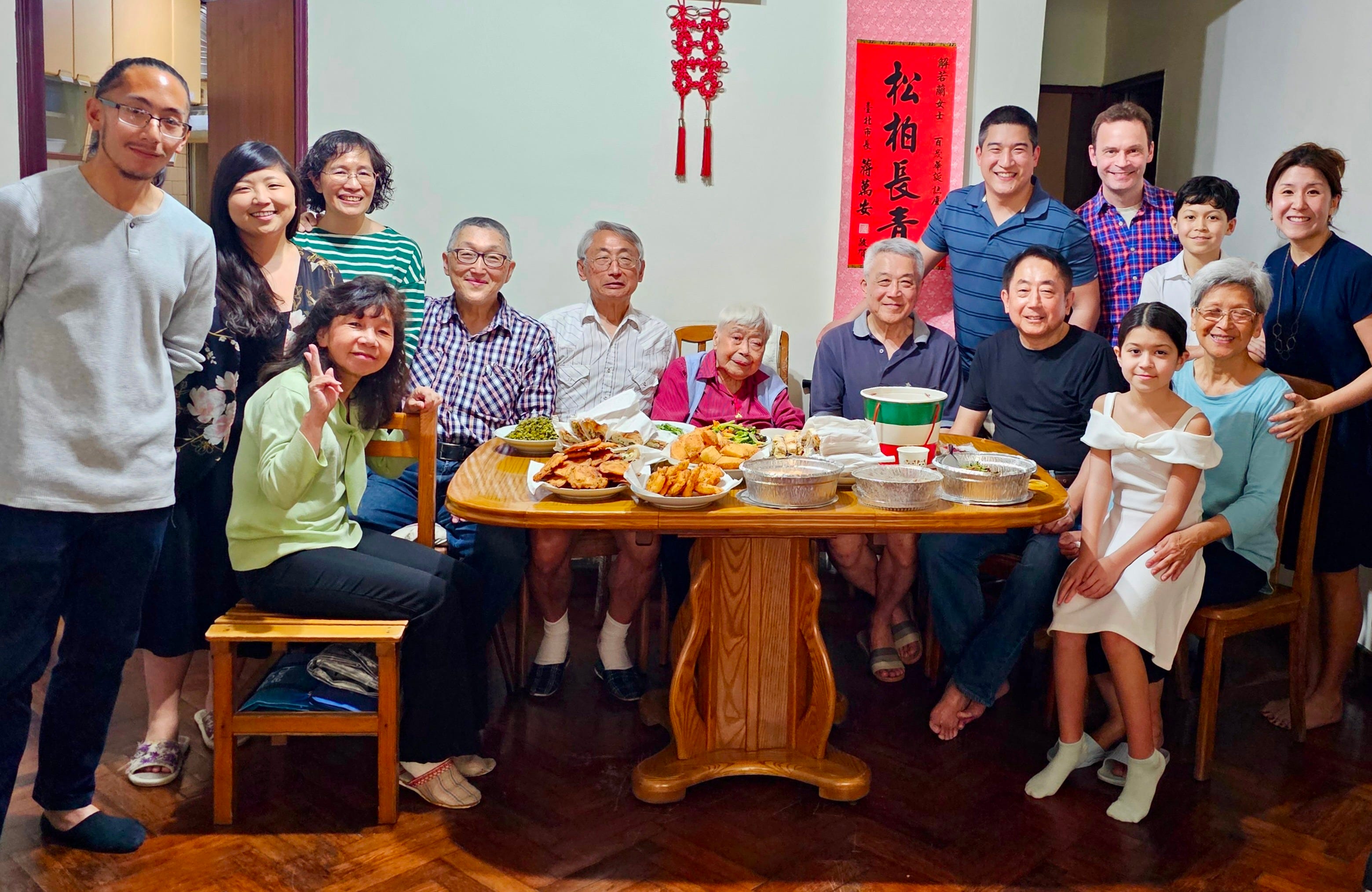
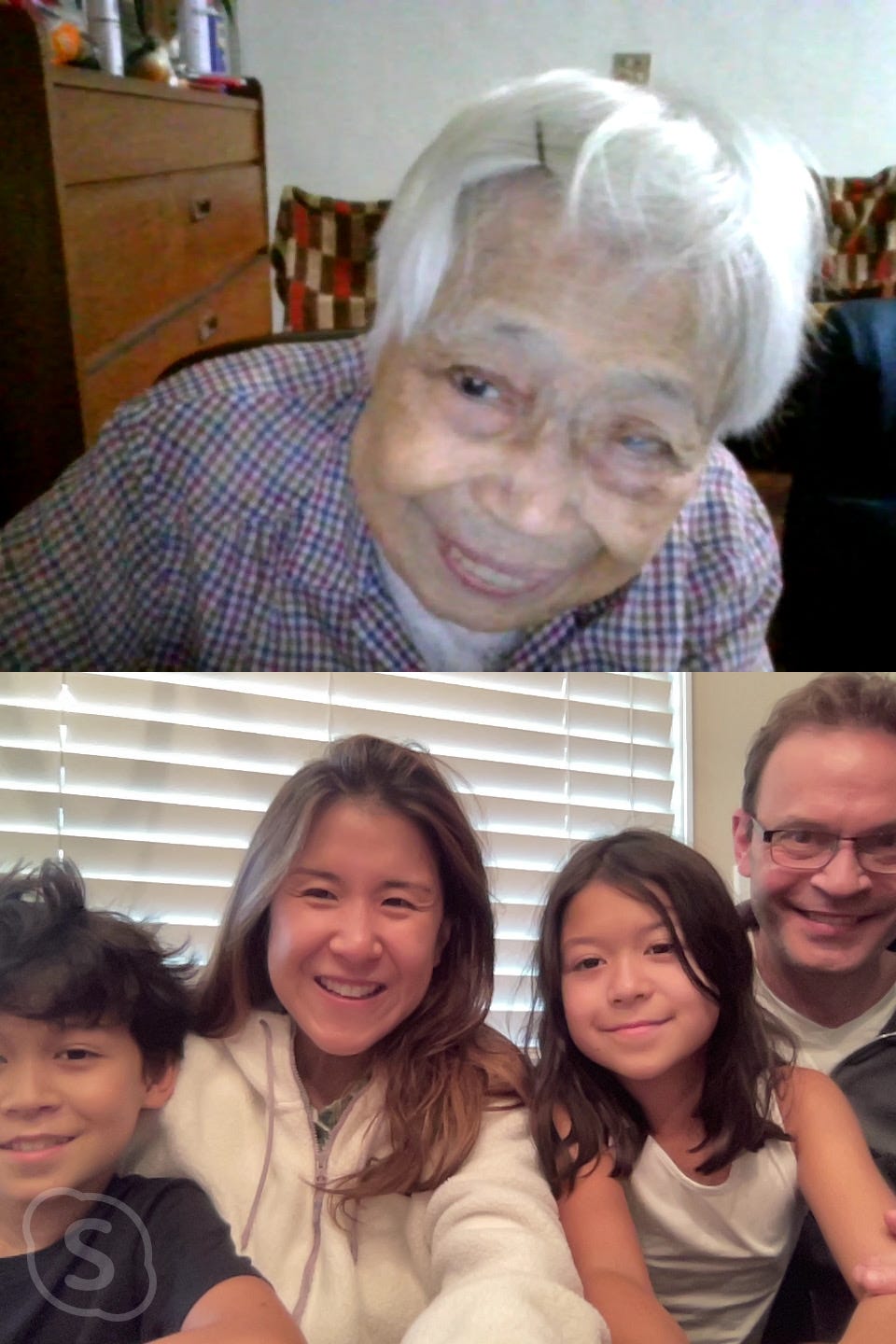
It was my kids’ first time meeting their great-grandmother (or Zhu Nai Nai as they call her) in person. But she wasn’t new to them. For several years prior, we had been doing weekly Saturday morning Skype calls to say hello. My kids don’t speak Chinese (I failed on that front), and so it was more of a brief 15-min nodding of heads with some light, poor translation from me. But I’d like to think it ingrained a few values that mattered in my children: honoring seniors, staying connected, and building in routines with meaning, to name a few.
My grandmother glowed during that visit. She was celebrated, doted upon, and the center of attention. She felt loved. I think it was a highlight of her life, seeing the family she built around her.
In the past year, my grandmother’s health started to decline. Her cancer returned and spread. Her once clear memory became fuzzy. Her fears started to guide her behavior, raising her suspicions, eroding sleep, and increasing her demands of others. Many of the qualities that enabled her to survive trying times started to impede her ability to gracefully enter the final stages of life. Stubbornness and relentlessness didn’t allow her to accept that the end might be near.
I am grateful that once she started hospice care at home with pain relief, Nai Nai suffered less. I’m also in awe of my parents who have put aside years of their own comfort and retirement dreams to care for her. It may have been Chinese cultural duty, but it was their personal commitment and love that made them stay in spite of, at times, truly difficult conditions.
Nai Nai was still talking throughout the night, even in her last few nights. It’s as if her mind still had things to accomplish, tasks that needed attention. But as her body guided her to rest, I think she finally realized in her final hour with my father, she had accomplished so much and was leaving behind a tremendous legacy.
My Grandmother’s Lessons
When I think about my grandmother, I don’t simply feel love or reverence. I feel a deep connection to what I learned from my grandmother’s journey and her behaviors. They aren’t all DO’s. There are some DON’Ts, too — because we can learn just as much from what doesn’t work as what does.
1. Focus on what matters and keep moving forward
Self-pity isn’t productive; action is. My grandmother had to make many difficult decisions in her life. She prioritized survival, her family's well-being, and, finally, her own happiness, choosing what mattered most in each season of life. And once she made a decision, she didn’t look back. She focused on moving forward.
Leadership Lesson
Priorities shift over time. The leaders who succeed are the ones who recognize the change and adjust their focus. They don’t waste energy ruminating; instead, they preserve their ability to navigate what lies ahead.
What’s one priority you need to re-evaluate? Stop avoiding the task. Schedule time to make a decision and move forward.
2. You don’t have to be alone
Even when all of her kids were across the globe, her only one of her grandchildren could speak so-so Mandarin (me), and gradually all of her friends passed away, Nai Nai didn’t choose to be alone. She sought out and found a few remaining family members in China (a maternal uncle and a maternal cousin). She welcomed thoughtful neighbors and community groups who periodically checked in on her. They brought small treats and made small talk. She didn’t push them away. She chose to get the support she needed.
Leadership Lesson
Leadership can be lonely. The weight of responsibility, the difficult decisions, and the confidential nature of the work. But you don’t have to go it alone. Trusted colleagues are there to support, and you can always bring in outside help: a coach, a therapist, a mentor, or all three.
Do you feel alone? Make a commitment to connect with someone you trust. If you don’t have one, source one. But don’t wait. Make this a priority for next quarter.
3. Take care of yourself when you can
Nai Nai couldn’t prioritize all her health needs when she was in the throes of taking care of 8 people. She was in survival mode. But as she got older and the weight of caregiving disappeared after my Ye Ye passed, she put herself first. Your health should always come first, but as a working parent leader, I know that it’s easier said than done at times. So do what you can, when you can.
Leadership Lesson
It’s never too late to take care of yourself. And if you don’t, no one else can help you.
What is one thing you could do to improve your health (mental or physical)? Start there. A doctor’s appointment. A 15 min workout. A 5-min stretch session. Don’t make it hard. Make it small and doable.
4. Enjoy what you can, when you can
Nai Nai has always loved food. She was a great cook and had a bit of a sweet tooth. In those early years in Taiwan, she and Ye Ye had to forego so much. So later in life, she was quick to ask for sticky rice with red bean or a pastry. She chose to savor what gave her joy. I’m convinced it was one of the reasons she lived so long — she enjoyed living.
What do you love about your work? What can you do to inject more of it into your day? Delegation, rescoping, and hiring additional talent. Be creative and be committed to making room for what lights you up. Do the same for your top talent and you’ll create a workplace that no one wants to leave.
5. Know when to let go
Nai Nai did this well earlier in her life and less so later in life. When she left China, she didn’t know she’d never see her mother again and wouldn’t be able to reconnect with any family until 30+ years later. But she knew to let go so that she could build a new life. When she was in her final year, she struggled to let go. She was so scared of death and beyond that she wouldn’t sleep, which added to her discomfort and stress.
Leadership Lesson
You can’t move forward if you can’t move on. Give yourself and your team the ability to move forward — let it go.
What are you holding on to that you should let go? A business idea, a team member, a decision that didn’t work out. Create a ceremony, journal your reservations, or talk to your coach or therapist.
6. You’re stronger than you think
Nai Nai faced terrible hardships throughout her life. They were made more stark because she was surrounded by comfort in her early years. But she made it through all of it. She had tremendous self-confidence and a belief that she could overcome anything.
Leadership Lesson
There will come a time when you don’t feel you’re equipped to do what it takes. Perhaps you’re behind on goals, or you’ve made a series of decisions that didn’t pan out. It’s easy to draw negative conclusions and to get demotivated. Your team needs you to stay strong.
Do you have anything making you feel down? If you need a moment for a pity party — do it. But then get back to it. Remind yourself of all you’ve accomplished and how you’ve navigated challenges in the past. You can do it again.
7. Don’t avoid change, embrace it
When I realized I wouldn’t be able to visit Nai Nai with my kids for several years, I asked my parents to buy her a computer and teach her to use Skype. She was 86. She didn’t complain. She didn’t resist. She didn’t worry about what was going to happen. She just learned how to take a video call with her granddaughter and her great-grandchildren. She wasn’t tech-savvy, and she didn’t need to be. She focused on the purpose of the tech and opened her mind to the possibility it was worth trying.
Leadership Lesson
AI, robotics, virtual reality, and more — there will always be a new technology out there. If you stay focused on your customer and team needs and stop worrying about constant change, you’ll choose wisely, learn what you need to learn, and invest in what your organization needs.
What are you overthinking? Can you take a simpler approach? Break the problem down and move forward with it in small chunks. Don’t let your fear decide what you do. That’s how the worst decisions are made.
Your Turn
My Nai Nai wasn’t perfect. No leader is. But she modeled essential leadership qualities that I emulated as I grew and evolved as a leader. And she was a grounding force when I faced adversity.
“Nai Nai survived. Nai Nai made it happen. I can, too.”
Too often, we think of leaders as people with big titles who lead large organizations. But as I get older, I realize that we have model leaders all around us, in our personal lives and in our community as much as in our professional ones.
Who have you looked up to as a role model leader? What did they help you realize and learn? I’d love to hear more in the Comments.
And if this post resonated with you today, please consider giving it a ❤️ and sharing it with someone who matters to you to help more readers find it and benefit from my Nai Nai's wisdom. May she rest in peace.
Thank you for joining me this week.
May you lead without limits,

Such a beautiful piece with wisdom and personal nuggets throughout. What a life your Nai Nai led and legacy she created. Amazing 💜💐
Kathy, what an extraordinary life and experience your Nai Nai had. Thank you for sharing her with us. We have so much to learn from our elders. May her soul be at peace.