


👋 Hi there, I’m Kathy. I write about how senior leaders can take their career, leadership, and mindset to the next level. Today’s post is my once-a-year step back on my solopreneur journey.
It’s not because I think everyone should leave their corporate or other organizational jobs. It’s because I want to practice what I preach — that stepping out of your movie and reflecting is one of the best ways to learn. And if you’re curious about going out on your own, I hope this gives you a peek under the not-so-glamorous hood.
Thank you for being here. You’re the reason why I do this work.

Even when I published my Year 1 reflections, it was already starting. The insidious glide toward burnout.
As my business, followers, and subscribers grew, what no one else saw was that my anxiety, brain fog, and fatigue did as well.
I had started waking up each day feeling behind. My “have to’s” were starting to outnumber my “get to’s.” My body was starting to constrict and stiffen.
I had fallen into the toxic social media dopamine doom wheel. I couldn’t put down my phone. I had gotten tendonitis so bad that it kept me up at night, and kept me from working out, which made sleeping even more elusive.
They say starting is the hardest part. I think staying the course is.
Starting has rarely been my problem — I give myself permission to stumble, and I ask for help. It’s the part after the beginning, when you’ve shown some sign you can do it. That’s when the really hard stuff begins.
We’re so quick to turn early wins into more pressure.
High achievers do this a lot.
You set the bar too high, too fast.
Whether it’s in the job search or on the job, you don’t give yourself time to build momentum before you up the ante. The minute you get a win, you change the goalposts. The exact opposite of what will help you keep going.
I see my clients who are 1 month into the job search do this and I see those who are trying to make deep leadership changes do this. And the result? They psych themselves out.
They take one good networking call and turn it into a need for every outreach to convert into a job opportunity.
They take one good meeting about a hard topic with a direct report and expect everyone in their team to shift the culture.
But reality doesn’t work that way. Progress, on the kinds of things leaders tackle, usually isn’t linear, nor predictable. And when you set the bar too high, too fast, all that ends up happening is you burn out.
It’s not because you are working too hard. It’s because you realize that you will never achieve your expectations.
I fell into this exact trap last year.
Burnout only took me 3 months.
I had hit all of my year 1 goals for my Substack, coaching, and my painting practices. So I decided to pile on more.
I started to build a corporate offering.
I added more clients.
I increased my posting frequency.
I upped my posting quality.
I booked a professional photo shoot.

All this in the fall of 2025, during the busiest season of life in my household: when my kids were both transitioning schools, when birthdays land, when we are traveling or hosting. When my husband and I tend to get the most stressed.
By January, I was fried to a crisp.
I couldn’t even open LinkedIn, much less write or comment.
Admitting fatigue doesn’t mean being defined by it.
Collaborators and clients might have sensed I was tired. But I’ve had decades of practice hiding my fatigue, not just to others, but to myself.
Admitting I was tired has always felt unsafe. The facade of never-ending capacity and capability was my armor. If I gave myself permission to slow down, would I ever get back up again?
I knew the answer. The only answer: Yes.
The only way to get back up again was to rebalance my work and life.
This was yet another opportunity to practice what I preach. That only when you strike the right balance between work and rest can you truly achieve your potential.
And it all starts with empathy.
I didn’t berate myself for repeating old patterns; I showed myself care for how human I was. Everyone slips into well-worn habits when we react to our fears instead of stepping back to assess them.
You have to lower the goalposts before you reset them.
I decided to give myself space. A lot of space.
I stopped posting on LinkedIn. I slowed down my notes on Substack. I gave myself permission to be inactive.
It wasn’t that I was just burned out. I was frayed at the edges. For months, I had been waking up around 1-3am and unable to fall back asleep. I told myself it was just a phase, but it was approaching 6 months. My brain fog was at an all-time high. I was starting to panic.
What if this was my new normal?!?
I wasn’t ready to give up. I was just starting my next chapter, the one I had been waiting for all my life. It was too early to declare defeat. But what I had been doing wasn’t working. I needed a new playbook.
As someone highly motivated by goals, I knew I had to start with a more helpful definition of success. Year 2 couldn’t be about numbers or revenue growth. In fact, it wasn’t going to involve my business at all.
2026 would be solely about my routines. The fundamentals. The foundation that everything else in my life rested upon.
I called it: Honing My How.
If my body and my mind were in disarray, my heart was coming next. I wouldn’t let that happen. It was time to reset… everything.
I paused to assess what I needed. I didn’t need more business. I didn’t need to grow faster. I didn’t need to compete.
I needed a new set of routines. I needed to feel rested. I needed to feel clear-headed. And I needed to do all of this with kindness so that the new patterns I was building would be without pressure and toxicity.
Rest and recalibration are active choices.
Beyond slowing down on social media, I tried some simple digital detox tried-and-trues and some eating-habit improvements.
I stopped using my phone to fall asleep to a story or podcast, a habit I had developed when my kids were going through sleep anxiety. At first, it actually made me more anxious. Would I be able to fall asleep without help? What would happen in the middle of the night?
It took only a week to normalize not having my phone at night. Feeling the win, I stopped bringing my phone into the bedroom altogether. Then stopped using my phone in the evenings after 6pm. I started to use DO NOT DISTURB aggressively.
I increased my protein intake and reduced how much I ate and drank in the evenings before bed. I cut back on sugary treats, which was easier after the holiday invasion had passed.
I was doing many more of the right things, but I was still waking up at night, overheated, and over-agitated. I was starting to lose my nerve.
In April, I met Olympic gold medalist and executive coach Steve Mesler. We did a Substack Live and in our catch-up call afterwards, Steve gave me advice that turned everything around:
Get the 8Sleep system, which his wife swears by. It’s a bed covering that calibrates your bed temperature based on your needs (this is not a sponsored post).
Use AI to create a workout routine that incorporates my health concerns and time constraints.
Keep at it for 3-6 months. That’s how long it will take to reset.
I rarely impulse buy. I’m more of a ponder for awhile and then ponder some more kind of person. The more it costs, the longer I ponder. The 8Sleep system is expensive. I bought it the same day Steve told me about it. That’s how desperate I was.
A week later, I fed Claude my health history, current challenges, physical therapy exercises, and my devotion to Dr. Stacy Sims (women’s hormonal health and fitness expert). It spit out a 3x per week exercise routine that addressed my poor discipline on warm-ups and cool-downs, fit my time constraints, and would give me time to recover, something I am horrible at.
The messy middle is the most dangerous stage.
I felt immediate heat relief at night using the 8Sleep, but my sleep patterns didn’t change for months. Early on, I got annoyed that I had to update the 8Sleep tracker in the morning to subtract the 2-3 hours I spent awake again in the wee hours.
My strength (and waistline) didn’t improve much at first either. I was following the new workout routine, but the results were elusive.
Like most humans in affluent countries, I’ve developed an instant gratification expectation that is as unattainable as it is unreasonable. I know very few things in life with deep value (relationships, health, expertise) can be gained overnight. But I still wanted it to happen NOW.
I tried to stay curious and reminded myself of Steve’s guidance. Going backward wasn’t an option, even if I couldn’t see the finish line. I needed to trust the process and give my body time to acclimate.
But it was hard to keep going when the results weren’t visible. That’s what’s so hard about the middle. Even if you’re a believer in “progress not perfection,” no one tells you what to do when there isn’t obvious progress either.
Luckily, my rule-follower and stubborn tendencies kept me going. I also kept hearing Steve in my head: 3-6 months for real change to happen.
Stay present, otherwise you might miss it.
Three months in, it finally did.
It was so gradual, I almost missed it.
Even when I was at my worst, I would sleep through the night at least once every one to two weeks. So when that grew to twice a week, or even three times a week, I didn’t notice at first. Only when I paused to reflect weekly would I see the broader trend, not only of hours slept, but of how I was feeling.
The brain fog started to recede. My strength training started to compound. Things that had felt daunting, like writing, started to feel more approachable. I restarted writing on LinkedIn consistently. I felt more energy to explore a rebrand. I was starting to feel more like myself, something I didn’t even know I had lost.
Taking on new things can make sense, even in the midst of a reset.
You would think I would have slowed down other parts of my life outside my business during this rest-and-reset period. I did reduce some of my social interactions, and as a family, we chose a much lighter travel schedule.
But I took on more in other areas.
I joined the Board of my nonprofit art institute. As a completely volunteer-run organization, this wasn’t as simple as adding quarterly evening meetings. It was more like taking on a part-time (and, occasionally, full-time) role.
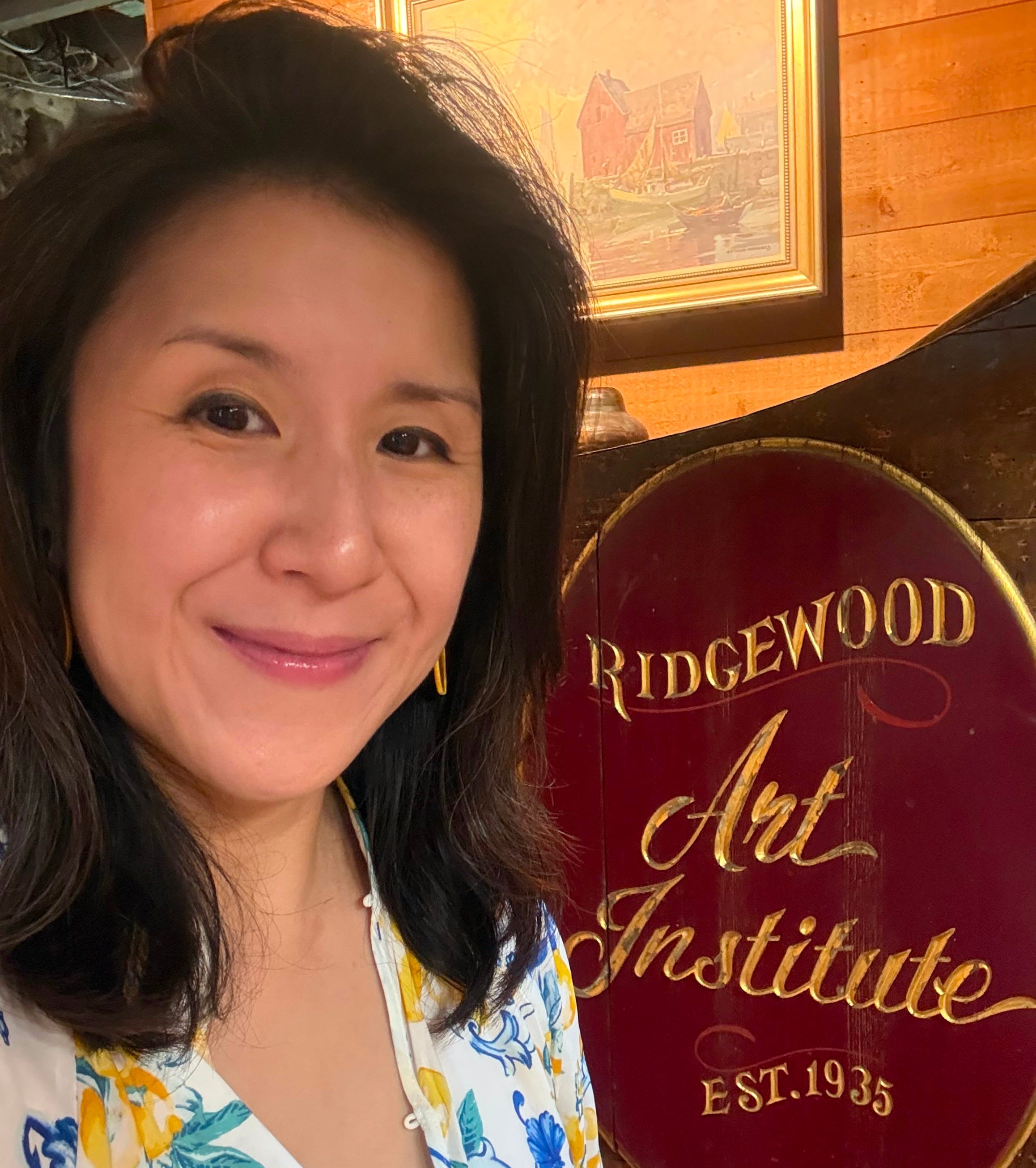
Since January, I’ve managed The Ridgewood Art Institute’s (RAI) website and email communications. After seeing some opportunities to build greater alignment, I also initiated a Strategic Planning process with the Board that will take the better part of a year to complete.
In my art, I decided to expand to portraiture. It’s been the type of painting I’ve most wanted to try, but felt the most daunted by.
Unlike a flower or a fruit, a person’s face has distinctive features that others will immediately see as out of place or not shaped correctly. The subtle color variations are complex and nuanced. In addition, my classmates are very skilled, and it can feel intimidating to paint alongside them, not because they are judgmental, but because I am.
Perhaps my brain fog clouded my thoughts, but I decided to give it a go in January.


It might seem strange to have taken on more in some areas of my life while I was pausing in others. I wasn’t just randomly choosing.
I used a simple rubric that I share with my clients:
Does it give me energy, or does it drain it?
When we spend time on what gives us energy, we aren’t simply adding more to our plate. We are adding activities that replenish us.
My work at RAI makes me feel more connected and puts me back in a leadership role context, something I didn’t even know I missed. Challenging myself in painting keeps my beginner mindset front and center. It keeps me wobbly, but in a way that supports my growth.
Both take time. And both add more than they take.
I check in with myself every week on where I’m getting energy and where I’m losing it. It’s how I stay present and actively calibrate my focus vs. letting myself slip into burnout again.
When you work on the fundamentals, the rest will follow.
So what happened to my business in a year when it wasn’t the focus?
It grew. Nearly 30%.
Importantly, it was driven by the segment I was focused on, my corporate clients. I love my individual clients, but I’m really enjoying serving a group of leaders, facilitating live sessions and speaking live.
And even though the business wasn’t my focus, I did make changes: I rebranded visually. I changed my pricing. I took on my first intern. I added a new offering.
I did it all in a stress-free way. I didn’t set hard deadlines or focus heavily on outcomes. I simply asked myself: What do I want to happen? What should I do to test or help it along?
If things took longer, so be it. If they didn’t happen at all, OK.
I didn’t do as much networking this year as in last year. My sleep and workouts took precedence. My online writing slipped in volume, frequency, and quality. It was the right trade.
I never lost sight of my clients and their needs. I’m sure I can improve how I support my clients, but I showed up to every call present, attentive, and ready to serve. More so this year, because I had more to give.
All because I prioritized the root of what was holding me back: the fundamentals.
What excites me about Year 3.
As I enter Year 3, the most obvious sensation I have is calm.
I’m not worried. I don’t feel pressure.
Instead of taking the wins from this past year and layering on more expectation and higher goalposts, I am simply going to keep going forward with the same rubric and focus on what gives me energy.
I don’t need more money. I don’t need more clients. I don’t need to do anything in particular.
I simply want to relish the opportunity to serve more leaders, to grow how I coach and paint, and to feel alive and connected to the people around me.
If you really want to press me for Year 3 goals, here’s what I would say:
Keep prioritizing my rest and health.
Keep checking in on how my commitments make me feel, and calibrating them.
More time painting.
Continue honing my writing routines to deliver maximum value with minimum stress.
Support more leaders and their teams who want to build meaningful careers and engaged organizations.
And in one sentence: Keep starting and ending each week feeling at peace with my progress and my priorities.
In my past, if my team was #5 on my list, I would have been concerned. But now, I don’t see my clients coming in at #5 as a problem. The leaders who want to work with me will relish the fact that I will serve them better because of 1-4, not in spite of it.
They know that because I’m focused on what gives me energy, I will be far more effective at helping them develop a new playbook, reorient their team, or shed habits that no longer serve them.
Take Action
Regardless of what type of job you have, the industry you sit in, or your career stage, you can benefit from a weekly reflection that helps you calibrate how you are spending your time and setting your goalposts.
You don’t need to wait until you’re feeling the negative effects of stress or for a year to pass.
Here’s my process for you to borrow.
Weekly Reflection
Give yourself 10-15 minutes of quiet. If your mind is still churning, close your eyes and take a few deep breaths. Stretching can help, too. Sometimes moving your body helps shift your mind.
Get a notebook and pen. There’s something clarifying that happens when you take a tactile approach.
Write down what went well and what didn’t go as well. Simple bullet-pointed lines. Nothing fancy.
Add a “(+)” and “(-)” next to what gave you energy and what drained your energy, respectively. Drop in some extra +’s and -’s based on what stood out the most.
Every month, take a look back at the last 4-8 weeks. Look for patterns.
Recalibrate your goals and priorities based on what you learn.
If you do this often enough, even if you miss a week or a month, it’s OK. You’ll have trained your mind to assess even without the sit-down. Don’t skip it on purpose, but don’t beat yourself up if you do.
Sometimes, the information won’t always make sense. For example, my RAI Board work is energizing most of the time, but it wasn’t in July. Looking back, I realized it was because I was overcommitted.
Even if the overall commitment isn’t too much, the micro-ones can be. Now I am much more conservative about how much I can complete in a day or a week, to leave room for unexpected issues or asks.
Commit to only 80% of your time. I guide my clients to do it, and I could only see I needed to do the same when I paused and stepped back.
Not sure you can reflect every week? Start with once every two weeks. Put it on your calendar. In a year’s time, you might be surprised at how your investments in your energy resulted in outcomes that exceeded your goalposts and didn’t stress you out in the process.
Give it a go and let me know how it works for you.
May you lead without limits,
Kathy
🙏 Thank you for joining me each week. I am so grateful for your support and feedback. You are why I do this work. Your leadership, potential, and generosity help me persist through challenges and keep growing.
If you found this post helpful, I’d really appreciate if you gave it a ❤️ so more leaders who need this can find it.
Onto Year 3!
Part of my Year 3 vision is to help more leaders. I’ve cooked up two new ways I want to do that:
New Paid Subscriber Benefit — Live Ask Me Anything Calls
Come join me for monthly group calls where I coach a few leaders live. Be coached yourself or watch me guide someone else.
1:1 coaching is wonderful, but the only voices in the room are your own and mine. When you’re in a group setting, you’re learning not just from your own experience, but from everyone else’s, too.
It’s why I’m kicking off live Ask Me Anything calls for my paid subscribers in October. Sign up now as a paid subscriber and be the first to submit a question for me to coach you live.
Bonus: To thank the first 20 subscribers who take the plunge with me, they will lock in the current rate for life.
Organizational Facilitation & Group Coaching
More and more leaders tell me they want to bring the power of the ME work we are doing together to help more of their TEAM work better. If you’ve been thinking about how you can energize your team and improve not just how they collaborate, but how they show up for each other, perhaps it’s time to invest in a different level of support.
When teams are given the tools to better understand themselves and how they work, that’s when they are more prepared to improve how they collaborate, communicate, and create solutions together.
Book a free strategy call with me to see if I am a good fit for your team’s needs.
I laughed out loud at your description of impulse-buying the 8Sleep. Bcause I've been there!
It's wild how quickly high achievers will throw money at a problem once health starts fraying, but balk at just... doing less.
Hi Kathy-
I love reading your content! I always look forward to hearing your perspective and I always get at least one idea or nugget that I can use in my life. That's really hard to do as a writer...and you do it every time!! Muchas gracias.